Showing posts with label homes for sale. Show all posts

Mar 2, 2013

Five ways to score a low mortgage interest rate


How do lenders decide whether or not to give you a low mortgage rate? Read on to find out.


low mortgage interest ratePhoto: Thinkstock
Are you planning to buy a home or refinance the mortgage you have, but not sure you have what it takes to score a low interest rate?
It's a valid concern since lenders' requirements have changed in the past few years thanks to the challenging economy, says Chris L. Boulter, president of Val-Chris Investments, Inc., a California company specializing in residential and commercial loans.
"Now, because of the mortgage industry crisis a few years ago, there are fewer lenders and higher standards to qualify," says Boulter. He adds that, unlike a few years ago, lenders are now demanding proof of things like personal assets and years of employment.
What other factors are lenders looking at? Keep reading to find out…

Factor #1: Credit Score

Ever feel like you're just a number in a computer to creditors? Well, when it comes to qualifying for a mortgage, that number is your credit score.
While it's not the only thing lenders look at, Boulter says your credit score is the first and most influential thing lenders check when considering your qualification for a mortgage. Equally important, your credit score is also used to determine how low your interest rate will be.
"To qualify for the lowest rates, you need a minimum score of 720," says Boulter.
According to the Fair Isaac (FICO) scale, which Boulter says is the scale most banks use, the scores run from a low of 300 to a high of 850.
But what if you've had a few bad breaks and your credit score has suffered because of them? Don't worry. While you may not qualify for those news-making interest rates, you could still get a mortgage or refinance with a very good mortgage rate, says Boulter.

Factor #2: Income vs. Monthly Expenses

Even Donald Trump probably wants more house than he can afford. It's human nature. So it's your lender's job to make sure you don't get in over your head by borrowing more money than you can comfortably pay back.
To do that, says Boulter, most lenders use a simple calculation: Your total liabilities (monthly expenses) cannot exceed 40 percent of your gross income. Lenders call this the debt-to-income ratio, says Boulter, and it's nearly as important as your credit score.
And remember, if both you and your spouse work, it's both your incomes combined - and both your liabilities that lenders will look at.
So, what counts as a liability? Here's a list of common ones, according to Boulter:
Homes for sale
  • Mortgage payment
  • Property taxes
  • Homeowners insurance
  • Condominium association fees
  • Credit card payments
  • Car insurance payments
  • Alimony or child support
  • Student loans
However, when it comes to your electric or cable bill, groceries, and life insurance…these are examples of things lenders figure you'll spend the other 60 percent of your income on.

Factor #3: Equity

Equity is the difference between the market value of your home (or the home you want to buy) and what you owe (or will owe) on your mortgage. It's important to know this definition as your equity has a big influence on whether or not you'll qualify for a low mortgage rate.
To get a good rate, says Boulter, your equity has to be 20 percent or more of the market value.
That's because when your home loses value, your equity is the first to take a hit. The more your down payment (equity) is, the less risk the lender has of losing money if home prices go down, says Boulter. In other words, prices would have to go down 21 percent before they start to lose money.
If you don't have 20 percent equity, you may still qualify for a mortgage, says Boulter. However, you will have to pay for private mortgage insurance (PMI), which covers the lender's losses if you stop making loan payments, according to the Federal Reserve System, which oversees national monetary policy and the banks. Their website estimates PMI to cost $50 to $100 a month

Factor #4: Job History

Have you had uninterrupted work for the past two years or more? Have you been in the same job, or at least the same industry? If you said yes, that's music to lenders' ears.
"Because of the high unemployment in recent years, lenders really want to see a stable job history," says Boulter. Typically, he says, they want proof of two years of employment in the same position or industry. And proof is not a nice letter from your coworker. It's pay stubs or tax returns.
If you've been a victim of the tough economy, however, and had to endure some unemployment, a mortgage isn't out of the picture for you just yet. You could still qualify,  you may just have to pay a higher interest rate and show additional favorable qualities, such as excellent credit, more than 20 percent equity, or a lot of savings.

Factor #5: Assets and Savings

Have you ever had one of those months where it seems like the universe is against you? The car breaks down, your kid needs braces, an illness stops you from earning money? You're not alone. Bad things happen to good people all the time, and the bank knows that. That's why lenders want you to have some money stowed away for a rainy day.
"Usually, lenders want proof of four to six months of reserves that you can access in case something happens to hinder your income," says Boulter. The reserves - or ready money - has to be enough to cover your mortgage and bills if, say, you lost your job.
The best reserve is cash in a savings account, he says, but other forms of assets are acceptable, too. This includes liquid assets such as stocks or bonds, retirement accounts, or insurance policies - all of which could be converted into immediate cash.
What if you don't have the necessary assets? If all other criteria are met, from credit to equity, you could still qualify for a mortgage, but Boulter says lenders are probably not going to give you the best rate. In other cases, you may not qualify and will have to do what you can to build up your assets before reapplying.


contact real estate agent
contact real estate agent number

Date Issued: March 2013 By: Terrance Loose Taken from: http://tinyurl.com/yahoohomesmortgagerate

Nov 29, 2012

No-Cost Mortgages Still Cost


By Scott Sheldon

house mortgages
“There’s no such thing as a free lunch.”
Such words have never been more relevant to consumers being pitched no-cost mortgages, which offer borrowers the ability to pay no closing fees.
No-cost loans do provide the consumer another choice in world of mortgage financing. On the other hand, the fees associated with procuring these loans still need to be paid, and the cost comes in the form of a higher interest rate, costing the borrower more over the life of the loan.

Crunching the numbers

Here’s how a no-cost loan works: The mortgage lender offers you a higher interest rate in exchange for providing you a credit to cover your closing costs.
For example, assuming a loan amount of $300,000 and closing costs of $2,600, the lender might offer you three distinct choices:
  1. 30-year fixed rate mortgage at 3.26 percent with 1 discount point (based on 1 percent of the loan amount) and you paying $2,600 in closing costs.
  2. 30-year fixed mortgage at 3.5 percent with no points and you paying the $2,600 in closing costs.
  3. 30-year fixed mortgage at 4 percent, no closing costs.
Comparing options 2 and 3, here’s how the math breaks down:
The 30-year fixed mortgage at 3.5 percent contains total interest paid over the life of the loan in the amount of $184,968, so the total cost of the mortgage (computed by adding the closing costs to the interest paid over the full term) is $187,568.
With the 30-year fixed rate no-cost option at 4 percent, the total interest over the full term of the loan comes to $215,609.
The total cost difference is $28,041, or about $85 per month.
So if the closing costs are $2,600, you would actually break even in about 30 months by paying the closing costs yourself and forgoing the no-cost option.

Length of loan

Ultimately it boils down to how long you plan to keep the loan. (Notice that’s how long you keep theloan, not how long you keep the house.)
If you plan on keeping the loan for:
  • 3 years or less: A no-cost loan makes sense considering that you’re going to be paying off the loan anyway.
  • 5 to 7 years: A no-cost loan begins to look less attractive than its fee mortgage counterparts.
  • 10 years or longer: No-cost loans take a backseat to fee mortgages.
If you’re in the process of refinancing and qualifying for a mortgage is tight, then it might be beneficial to use a no-cost loan option. For example, if you have to pay down your principal balance to refinance your mortgage loan, a no-cost loan might make sense considering your cash assets would be going to the principal balance to reduce the amount financed.
Securing the lowest possible mortgage rate is on every consumer’s mind these days, but in order to achieve that, a no-cost option wouldn’t be suitable. To get the best possible interest rate and subsequently the lowest monthly mortgage payment, consider taking out a no-points mortgage loan or a loan containing discount points, so long as the interest rate is favorable.
Related:
Scott Sheldon is a senior loan officer and consumer advocate based in Santa Rosa, California. Scott has been seen in Yahoo! Homes, CNN Money, Marketwatch and The Wall Street Journal. Connect with him at Sonoma County Mortgages.
Date Issued: November 2012 Taken from: http://www.zillow.com/blog/2012-11-06/no-cost-mortgages-still-cost/

contact real estate agent
contact real estate agent baltimore

Nov 26, 2012

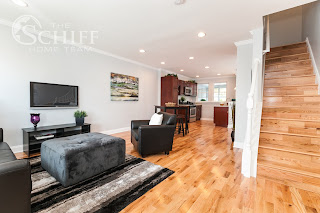
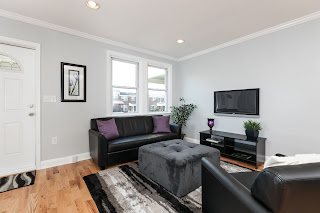
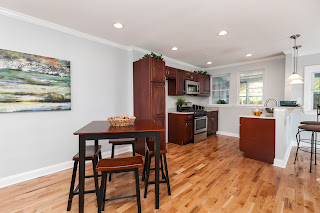
Featured Listing- 4134 Townsend Avenue Baltimore, MD 21225


Best Buy in the Area! 

You'll feel at home from the very first moment you walk in the front door. The perfect blend of comfortable living at an affordable price. Enjoy the quality and allure of 3 fully-finished levels providing all the space you are looking for! Every room, from its finished basement to its open kitchen make this a warm and inviting place for everyone. Deck and off street parking in the rear. Come take a closer look!


Baltimore real estate Homes for sale Kitchen
 Breakfast Bar Dining Room Baltimore real estate house for sale
 Living Room Baltimore real estate Buy a Home
 House with Deck Baltimore real estate buy a home for sale


Nov 21, 2012

Featured Listing- 217 Old Riverside Road Baltimore, MD 21225


Rare Opportunity to Buy a Professional Home! 

Enjoy the perfect blend of remarkable craftsmanship and modern-day amenities at an affordable price. Gleaming hardwood floors throughout. Open kitchen with granite and stainless steel appliances, plus breakfast bar - perfect for entertaining! Spacious bedrooms and designer-style bathrooms. Finished lower levels creates additional space for recreation and fun. Sun room, rear patio and off street parking!...
Search Properties
Living Room Featured Listings Baltimore Homes for Sale
Maste Bedroom Featured Listings Baltimore Homes for SaleLiving Room Baltimore Real estate home for saleDining Room Baltimore Real estate home for sale


Nov 19, 2012

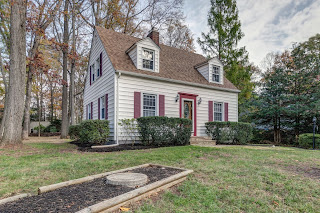
Featured Listing-1010 Hart Road Towson, MD 21286

        Rarely Available in Hampton Gardens! 

This inviting cape cod has been newly renovated to accommodate modern-day living!! All new granite kitchen with cherry cabinets and stainless steel appliances. Open family room off kitchen. Enjoy newly refinished hardwood floors and wood stove in living room. Main level bedroom with full bath. Fully finished low er level creates additional space for recreation room or 4th bedroom. Rear patio, large lot and convenient location. A great buy!


Search Properties
House in the woods for Sale Maryland
Best Sitting Room Luxury Home for Sale Maryland
Best Bedroom Luxury Home for Sale Maryland
Best Granite Kitchen Room Luxury Home for Sale Maryland

Michael Schiff Home Team
Call Now Shiff Home Team


Apr 25, 2012

'Severely' overburdened homeowners, renters


Taken from: weblogs.baltimoresun.com

How many people spend more than half their income on housing costs? More than you might think.
In the Baltimore area, one in five households with workers pulling down middle-income or lower-income wages fell into that pinched group in 2010, according to a new report by the Center for Housing Policy. That's nearly 85,000 households "severely burdened by their housing costs."
But it's not quite as bad as the nation overall, with nearly one in four of what the center dubs "working households" falling into that category. 


The center, which looked at regions and states across the country, considered all renter and owner households with adults who made no more than 20 percent over their area's median income and worked at least 20 hours a week on average in 2010. That means retirees weren't part of the calculation -- and neither were those who were out of work or had their weekly hours cut below 20, a situation that plenty of Americans were stuck in that year.
"Had they been included, the number and share of low- and moderate-income households with severe housing cost burdens would have been higher: overall, 27 percent of low- and moderate income households in the United States — or 18.2 million of the more than 67 million households — had a severe housing cost burden in 2010, up from 25 percent in 2008," wrote the report's author, Laura Williams.

The share of severely burdened working households in the Baltimore area has fluctuated a bit the last few years. It was 19 percent in 2008 and 21 percent in 2009 before dipping to 20 percent in 2010.
The United States, by contrast, has steadily inched upward: 22 percent, 23 percent, 24 percent.
The report looked at both homeowners and renters, finding that tenants were hit with rising rents (up 4 percent) and declining income (down 4 percent) while homeowners' income fell faster than their housing costs (down 5 percent and 2 percent, respectively).  


"Median housing costs for working homeowners declined modestly between 2008 and 2010," the center noted. "Meanwhile, the incomes of working homeowners declined even more, driven in large part by a decrease in the median number of hours worked per week."
Where do you stand?

MAKE THIS HOME YOUR OWN!


DON'T MISS OUT!


THE IDEAL HOME TO GROW UP IN!


YOUR NEW HOME