Showing posts with label real estate tips. Show all posts

Nov 26, 2012

Featured Listing- 4134 Townsend Avenue Baltimore, MD 21225


Best Buy in the Area! 

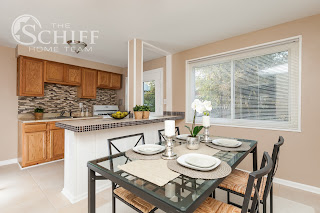
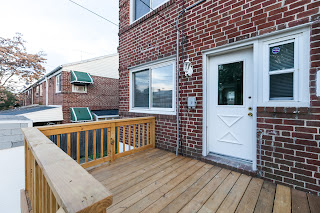
You'll feel at home from the very first moment you walk in the front door. The perfect blend of comfortable living at an affordable price. Enjoy the quality and allure of 3 fully-finished levels providing all the space you are looking for! Every room, from its finished basement to its open kitchen make this a warm and inviting place for everyone. Deck and off street parking in the rear. Come take a closer look!


Baltimore real estate Homes for sale Kitchen
 Breakfast Bar Dining Room Baltimore real estate house for sale
 Living Room Baltimore real estate Buy a Home
 House with Deck Baltimore real estate buy a home for sale


May 3, 2012

Buying Is Cheaper than Renting!!!

Taken from: baltimorehomemarkets.com

Buying is more affordable than renting in 98 out of the nation's 100 largest metropolitan areas — even in New York, Los Angeles and Boston, according to real estate company Trulia's rent vs. buy index.
The index is based on asking prices for rental units and homes for sale on the company's website between Dec. 1, 2011, and Feb. 29.
“As rents rise and prices stagnate, homeownership is becoming even more affordable, but rising rents create a dilemma for people who can’t afford to buy yet,” says Jed Kolko, Trulia’s chief economist. “Rising rents make it harder for people to save for a down payment, which is the biggest barrier to buying a home that aspiring homeowners face.”
Homeowners are choosing, or being forced, to rent rather than buy even though the latter is cheaper in key markets Trulia reviewed.
But as they turn to renting, the influx of demand squeezes the nation's rental supply, pushing monthly rents higher.


The nation's median rent stands at $712 per month — well above the average monthly mortgage cost of $647, Paul Dales, senior economist at Capital Economics, recently found. He estimated decreased vacancies in the home-rental market will push average rental rates up as much as 5% by early 2013, compared to 2.4% in January.
As a consequence of less willingness and ability to buy a home, households in rentals will rise by at least 850,000 a year over the next few years, Dales said.
He expects rents to rise at an annual rate of 3% this year and remain at that level in 2013. "Assuming that the economic recovery gains firmer footing, in future years there is scope for rents to rise by around 4% a year," Dales said.
Only in Honolulu and San Francisco is renting often a better deal than buying. However, Trulia points out that buying a home in these markets might make sense for people who plan to stay in their next home for at least five years and can benefit from the mortgage-interest tax deduction.


“Metros where homeownership is expensive tend to have stronger long-term economic growth and little room to build new homes, like Boston and the San Francisco Bay Area, where people expect home prices to increase over time," Kolko says.
"Buying is much cheaper than renting in slow-growing places with high vacancy rates and land to spare, like Detroit and Cleveland, where prices are unlikely to improve much in the future," he says.

Apr 30, 2012

Time, Dollars and Equity - Learn All About Real Estate Investing

Taken from: www.biggerpockets.com

leverage real estate

By completing the previous Key to Successful Real Estate Investing while Working Full Time you should have a good understanding of what is “Core” to your business and what is “Context”. Remember “Context” should be outsourced to other team members and “Core” are items you complete.
With this you now have some things to focus on and at the top of this list is Leverage.

Leverage Time, Dollars and Equity as you build and run your business.

Given that you work full time, leveraging your time both effectively and efficiently is Key as available time is a scarce resource. However, the real trick is to get good at leveraging other resources or team members’ time. If you can find multiple ways to leverage team members time you will see your business explode with positive growth.


Let me give you a couple of examples that work in our business:
As you know we are buy and hold investors in a California market. We pride ourselves in turning ugly and distressed properties into quality rentals. However, given we work crazy hours and travel all the time it is very hard to find these properties before they get bid up or scooped up by local investors who follow the same model.
That is exactly why we listened to Tony Alvarez (Our Mentor) and learned how to work with real estate agents in our market. We spend lots of time leveraging our relationships and helping those agents sell problem properties. By working with agents and getting them to trust us as closers of tough properties, we get the phone calls when other deals fall apart.
Lots of investors will pay more for properties as we don’t get in bidding wars; additionally, we close 100% of the deals we get in escrow. Thus, on occasion we get a call from an agent about a flaky buyer or problem property. By earning the trust of these agents we can pick up some nice properties because we will close if we get the deal in escrow; of course, closing is more important than a couple of extra bucks to many agents.

Leveraging your financial resources is also key, because we want our dollars working for us as hard as possible. If you simply spend your resources and then sit back and wait you will have a slow road.
I suggest a better approach is to investigate every avenue you have to leverage your dollars. Perhaps you can find away to recycle your hard earned capital. Perhaps you can find away to leverage past 401K’s by converting to Self-Directed IRA’s? Perhaps you can find a way to leverage dollars via VA foreclosures or other like-financing options.
The final area to get focused on, is leveraging equity as the market changes over the years. You may not get a chance to use this tip for a few years, but the ability to leverage equity will be key to accelerating your business.
In our business we leverage our equity in several ways. First we did cash out refinancing when it was possible before the crash. Second and more powerful for us was when single family homes made no business sense, we sold them and did 1031 Exchanges into small apartment buildings. This exchange allowed us to leverage our equity into a lot more cash flowing rental properties. 
In addition we created a business model that allows us to buy distressed assets for cash, repair the asset and then via passive investors, extract a portion of our equity by offering a 10% interest-only note and first deed of trust on the now repaired and leased property.  This model works very well for us in today’s market as intrest paid on savings is very low. 


Search for homes in the area of Baltimore!!


Our passive investors love the return, the security, and the fact that they get a chance to participate in the Real Estate Market without taking the risks of active investing or having to invest all the time in learning the market.
Now I admit that cash out refinancing and selling properties via a 1031 Exchange today are not great options, but over time they will be, and you need to be ready for it. As the market changes and the press picks up on the fact we have hit the bottom in the market, real estate will come back in vogue and you need to be ready to leverage your equity.
Have you noticed lately that at least 75% of the press on real estate is positive the last 6-8 weeks? When the market changes from a buyers market to a sellers market we will be ready to exchange all of our houses for small apartment buildings again. It is a very profitable strategy.
In the end the fifth key is about getting good at leveraging Time, Dollars and Equity to insure maximum return to your business.

Apr 27, 2012

Opening an Escrow Account -Learn how It Works!!!

Taken From: www.realestate.yahoo.com

If you've ever made an informal bet with a friend, you may have asked a third person to hold the money until the wager was resolved. When you take out a mortgage to buy a home, you're doing something similar by opening an escrow account.
How it works
When you put money in escrow it is held by a neutral third party (called an escrow agent) who works for both the lender and the borrower. The agent's role is to carry out the instructions agreed upon by both parties. The money is released when all the terms of the agreement are met. Escrow can be involved in anything from multimillion-dollar building projects to purchases made on online auction sites.


When it's used
When your mortgage closes, your lender will usually require you to open an escrow account to cover property taxes and homeowner's insurance. You'll make an initial deposit, followed by payments to the account every month. (Usually these are added to your regular mortgage payment.) The escrow agent will then release these funds as your taxes and insurance premiums come due.
Its purpose
The idea is to protect the lender by ensuring that you pay your taxes and insurance on time. If you default on your property tax, for example, your municipality can put a lien on the house, which would make it difficult to sell. Or if your house burns down and you've neglected to pay the insurance, the lender would be left with no collateral.


How you benefit
Escrow can benefit borrowers by helping them spread insurance and tax expenses evenly over 12 payments. For example, assume your yearly property taxes are two payments of $1,000 each, and your insurance is $400 annually. If you paid these directly, it would mean three large payments a year; your escrow costs, however, would be a manageable $200 a month.
Escrow payments
Your escrow account will have a built-in cushion -- if you miss a payment, the lender must still be able to pay your accounts on time. However, federal law prohibits lenders from requiring more than two months. expenses in escrow. And because your tax and insurance costs will change slightly from year to year, the lender will review and adjust your escrow payments annually.


When escrow may be waived
In most states, the money you place in an escrow account earns no interest for you. For that reason, many borrowers prefer to pay their taxes and insurance directly. Lenders may agree to this if your down payment is more than 20 percent, although some will raise your interest rate slightly to compensate. Once you agree to putting funds into an escrow account, however, it is difficult to cancel it, so make sure you fully understand the arrangement before your mortgage closes.

Apr 25, 2012

Learn the Steps for Establishing Your Real Estate Investing Criteria

Taken from: www.biggerpockets.com

Assume you are following the series of successful tips to Real Estate Investing while working full time, you know that you need full and complete support from your significant other and you need to invest time doing “The Homework” in your market.
Once you have a handle on your market and a good understanding of a bad deal, average deal, good deal and great deal, you are ready for the next step.  I suggest the next thing you do is sit down and review your homework and document your buying criteria.


Establishing Your Real Estate Investing Buying Criteria

Let me be clear, the more specific buying criteria the better.  For Example:
  • I want to get a good deal is a terrible buying criteria!
  • I want to get a deal that returns 15%+ on my cash is a great buying criteria!
  • I want to get something at a 20% discount.
This last one sounds like a good goal but who gets to decide the price or the discount level?  I know lots of investors use this or similar criteria.  I would argue that the criteria is too subjective and open for interpretation.  Buying criteria like this can lead you to lie or mislead yourself into thinking you have found a good or great deal.  Don’t let this happen to you.
Once you decide on your buying criteria I need you to do two things.
First, write it down and put the buying criteria in a couple of places.  I suggest putting it near the computer you do your research on.  I also recommend putting it in your wallet or purse to ensure it is always with you.  It wouldn’t hurt to put it in your car as well.


By writing it down you can hold yourself accountable and remind yourself of what you are looking for.
Second, tell your significant other.  Remember they are already on board with you, so share the buying criteria with her/him and tell them why you have decided on the criteria.  I would also share the homework you did from key #2 to ensure they completely understand the buying criteria under the lenses of the effort you have already expended.
Sharing the buying criteria with your significant other ensures they understand and they can help you hold yourself accountable.  I am a huge fan of teamwork and families working together in this business.


A quick caveat about buying criteria:

I have one additional filter I put all my deals through to ensure I don’t get too focused on the numbers.  I use the following rule to insure I am not too numbers focused.

Would I be comfortable with my wife driving to the house during the day, getting out of her nice car and going into the house alone? 
If the house or property doesn’t pass this test, I don’t care if it is the best deal on the planet.  I won’t buy it.
I use this filter to avoid war zones.  I love buying properties in older areas and showing how much we care by remodeling the property, but I won’t take a risk in areas where I am afraid to drive and review my property.  It is just not worth it.

Apr 24, 2012

More Efficient Times for Short Sales


Taken from: http://www.biggerpockets.com

We all know that Friday the 13th is considered to be bad luck according to western superstition. Yet, ironically, on Friday, April 13, Bank of America made a few major changes that may make our short sale processing times more efficient.  The goal of these changes is to make short sale processing through Equator (the Internet-based platform) at Bank of America so efficient that short sale approval can be received in less than one month.


First off, Bank of America will require their new third party authorization for all short sales being processed through the Equator system. Additionally, the folks at Bank of America will be working to improve task flow for short sales in Equator by making some minor changes to the process.


According to the Bank of America website,


Starting April 14, you’ll see several changes:
Five documents (which you can obtain atwww.bankofamerica.com/realestateagent) will be required for short sales initiated with an offer:
1. Purchase Contract incuiding Buyer's Acknowledgment and Disclosure
2. HUD- 1
3.  IRD Form 4506-T
4. Bank of America Short Sale Addendum
5. Bank of America Third- Party Authorization Form 


And, effective April 14, you will have only 5 days to submit a backup offer if your buyer has flown the coop.
The last change is a curious one, especially for short sale listing agents, since it often takes awhile to find a new buyer after you learn that the current buyer has changed his or her mind. Nevertheless, lucky or unlucky, be prepared for changes to Bank of America processing that became effective on Friday, April 13.


Apr 19, 2012

With Falling Home Values and Low Mortgage Rates, Today's the Perfect Time to Get a Vacation Home!!

Find beautiful homes in Baltimore!

Taken from realtormag.realtor.org

Some buyers are calling the vacation-home market the “perfect storm,” — falling home values, low mortgage rates, and increased affordability — which is prompting more opportunity in the second-home market.
The National Association of REALTORS® reported last week that vacation home sales increased 7 percen


t in 2011 over the prior year. Of those surveyed, 33 percent of the vacation home owners surveyed say they purchased a home because of the low real estate prices. Also, 91 percent reported they plan to rent out their second home purchase in the next year. Seventy-one percent say the higher rental income potential from investment properties helped motivate their purchase. 


Many second home owners may have been sitting on the sideline, waiting for the perfect time to pounce on bargain prices, but are seeing that time as now, housing experts say. And more buyers are  making all-cash purchases, too: 42 percent of vacacation-home buyers paid cash for their home, according to the NAR survey. 
Vacation home buyers are also looking past popular beach or ski resorts to make their purchase, says Walter Molony, spokesman for the National Association of REALTORS®. "Many are in lesser-well-known areas, places known mainly on a regional basis,” says Molony, adding that places such as Gatlinburg, Tenn.; Brown County, Ind.; and Williamsburg, Ky. are seeing more attention from buyers in vacation-home purchases.

Find your new home right now!!



“Name destination resorts are only a component of the picture,” Molony told MSNBC.com. “Most people want to be within an easy drive of their [vacation] home.”

Apr 18, 2012

Increase Your Home's Value Through These Renovation Ideas

By RICHARD TAYLOR 
INMAN NEWS, TUESDAY, MARCH 20, 2012


Conventional wisdom, as it relates to houses, is often too much convention and not enough wisdom.
Every year, somebody publishes a list of which conventional home improvements will give you the best (or the worst) return on your remodeling investment.
Remodel a bathroom. Replace your siding. Don't build a swimming pool. Paint everything neutral colors.
Sit up straight. Get a haircut. Call your mother.
If return on investment (ROI) is why you bought a home, or why you're remodeling one, you can stop reading now. Because the rest of this article isn't for you.
Three, two, one ... still here?
You invest in your home to improve livability first, not value. If you get more value in the process, consider it a bonus, but don't make ROI your prime directive.
Otherwise, you'll end up like the potential client who came into my office a few years ago with a three-page, single-spaced typewritten (as in made with a "typewriter") list of things he wanted in his house.


Find out more about real estate right here!!
His list included this line: "A large dining room, near the kitchen. Although we don't need or want a dining room." Why would he want to build a room he didn't need?
Because he's thinking of things to make the house valuable, instead of things to make it livable.
So let me rephrase the remodeling-ROI question this way: What are some cost-effective ways to improve the livability of your house?
Here's my short list:
1. Walk-in pantry instead of kitchen cabinets
Kitchen cabinets are expensive. Half of them are up high on the wall where they're hard to reach, and the wall space they take up could be better used for windows. A pantry takes up less space, stores a lot more, is much easier to use, and costs less to build.
2. Comfortable shower instead of big bathtub
My firm does a lot of work in late-'70s/early-'80s neighborhoods that are loaded with huge tubs. We're taking them all out, one at a time, and replacing them with comfortably sized showers (not the racquetball court-sized ones you see in home shows) that people actually use every day.
A shower takes up less space, uses less hot water, and is far more sanitary than a big tub.
3. Group windows together facing best views instead of scattering them around the house
Got a great view somewhere? Bring it into the house with lots of glass. Take excess windows from bedrooms and bathrooms and use them to connect the inside of the house with the outside.
We once remodeled a house on the coast of Lake Erie that had one window -- one -- facing the lake. Hey, pal, did you notice you have one of the Great Lakes in your backyard?
4. Keep ceiling heights reasonable for the room size
"Volume" ceilings do not automatically make better rooms. They just make taller rooms, rooms that are harder to decorate and more expensive to heat and cool.
Instead, focus attention on a view, a large fireplace or other element -- and away from the ceiling height. Use wall trim and multiple paint colors to break up the volume of the room and create the illusion of height.
5. Spend more time planning, and less money building
I toured a client's existing home before we began designing the new one. "Of course," she said as we peeked in on the kids' rooms, "These bedrooms are way too small."
"Really?" I thought. The smallest was probably 14 feet by 15 feet. But each bedroom had at least one door or one window on each wall.
Pretty, but the design left little room for furniture.
I suggested we more carefully design the new bedrooms, keeping the furniture placement in mind. In the end, we were able to easily accommodate each child's bedroom furniture comfortably in smaller bedrooms than what they'd had before.
6. Consider the simple elegance of the box-form house
Subtlety and restraint used to be virtues in home design. These days, far too often, inexperienced designers attempt to attract attention to their homes by adding more stuff: more gables, more materials, more bay windows, etc. Others know that proper proportion, scale and details are what turn heads.
The simple box-house is a classic American form that's survived 150 years of stylistic changes. Greek Revival, American Four-Square, Tidewater Georgian ... all simple boxes. Great proportions, great details ... done.
And here's a bonus: The box-form is easier and cheaper to build, and because it encloses a larger volume in less perimeter, it's less expensive to heat, cool and maintain.
7. Share part of the master bath
This isn't for everyone, but it really tightens up the budget and the floor plan. Make the toilet and a sink in the master bath accessible to the rest of the house, instead of building a separate half-bath -- it won't be used much by you during the day, and rarely by guests at night.
Why have two baths when one will do?
8. Spend it when you have it, not before
Sure, it'd be great to have those granite countertops now, but your budget's tight and granite is 10 times the cost of laminate tops. So how about putting in nice laminate tops now, and replacing them with granite in five years when you have the cash? You can easily do the same with light fixtures, flooring, window treatment ...
9. Compartmentalized bath -- two baths in the space of 1 1/2 baths
Each kid doesn't need a personal bathroom, but does need privacy and room to share. A compartmentalized bath puts two sinks in one room and the toilet and tub/shower in another, so three kids can use the bath at once and keep a little more harmony in the family home.
I doubt any of these ideas will ever make a magazine's list of "Best Remodeling ROI" projects. But every one saves you money over a more "conventional" design strategy, and every one increases the livability of your home.
Find your new home right now!!